
Long-Tail Keywords: How to Master Them for SEO Success
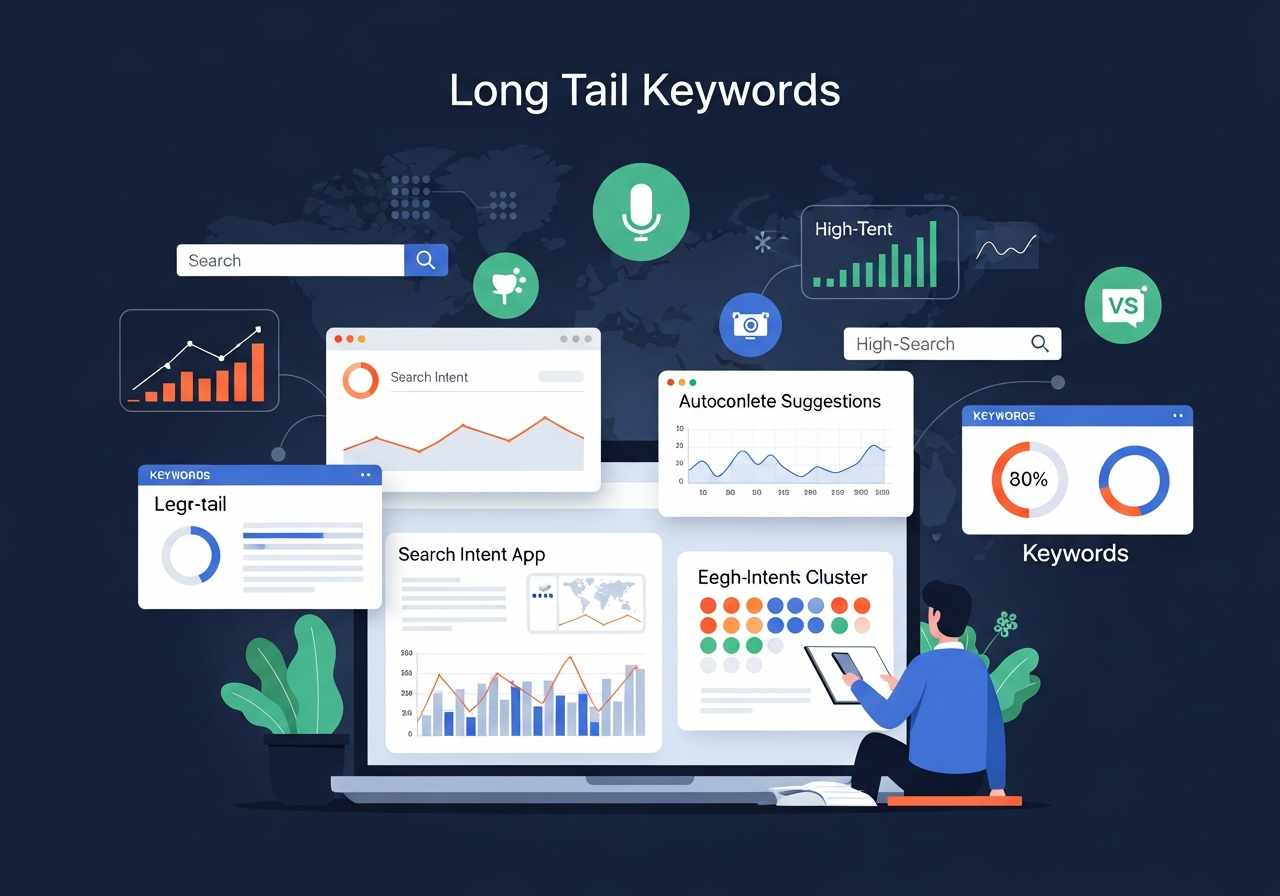
Did you not know that long-tail search queries are approximately 92 percent of all search queries? And that is so–the majority of the people do not just type in a word or two but type in particular phrases. It is these intensive searches that will unlock traffic that will actually bring in, the loyal customers who are casual browsers.
General keywords such as running shoes attract millions of searches but have intense competition. Long-tail keywords, such as “best cushioned running shoes for flat feet 2024,” target a narrower crowd with clear needs. Learning this method will assist you to get high-intent visitors who are willing to make purchases which can be suitable in small businesses or niche websites pursuing organic growth.
Breaking down the Long-Tail Keyword Phenomenon
Defining Long-Tail Keywords (LTKs) by Length and Intent
Long-tail keywords usually have three or more words. They create the complete image of what is desired by a person. Imagine that they are questions that are more detailed, such as: how to repair a broken faucet in the bathroom, rather than simply: plumbing.
The short head words such as shoes receive a lot of traffic and are difficult to rank. Mid-tail ones, which read women running shoes, are in the middle. Long-tail is unique because it is not only long but corresponds to the intention of the user, the actual purpose of the search. Tools have now identified this intent quickly and assist you in selecting winners.
This emphasis of purpose is what LTKs are bright. They accommodate voice searches as well, where the people speak complete sentences. The way to build trust is to respond to what they request.
The High Conversion Rates are the Core Advantage
Specific search implies better probabilities of sales. Individuals who make use of long-tail phrases are aware of what they require. They may enter into a search query as cheap wireless earbuds less than 50 with noise cancelling features since they are intending to purchase.
These users are further in the purchase decision. They are not window shopping, they are searching or making decisions. The result of that is higher conversion rates- usually 2-3 times better than broad terms.
The difference can be summarized in the following table:
| Keyword Type | Typical Search Volume | Typical Conversion Rate |
|---|---|---|
| Head Terms (1-2 words) | High (10,000+ monthly) | Low (1-2%) |
| Long-Tail (3+ words) | Low (100-1,000 monthly) | High (5-10%) |
These are to be targeted to get quick revenue wins.
Less Competition, More Publicity Probability
Large websites pursue popular keywords, and leave long-tail open to you. Smart content allows smaller domains to be ranked on page one quickly. You do not need an enormous budget just good target pages.
These are disregarded by the established players as they appear too small. But pile them on, and there is traffic. According to recent statistics, approximately 70 percent of all searches done on a daily basis are unique long-tail queries.
Grab that spot now. New locations bear fruits within weeks and not years. It’s your chance to stand out.
Identifying and Researching High-Value Long-Tail Keywords
Riding Search Engine Suggestions and Autocomplete
Begin with a seed word such as running shoes. Enter it in Google and autocomplete offers you ideas. You will find such gems as running shoes with wide feet, or best running shoes with beginners.
In the bottom, scroll down to related searches. The “People also ask box displays questions, which is best suited to long tail. One click, and a list unfolds–and it is simple to make a list.
E.g. Type in how to, and your subject. Harvest 10-20 phrases in minutes. It is free and resembles actual user conversation.
Applying Keyword Research Tools to Intent Mapping
Such tools as Ahrefs or the Keyword Planner tools of Google go deep. They identify questions of type how, what, or best. Use indicators such as near me, or beginners that are used as modifiers.
Insert a general keyword, give long-tail filter. Check volume and difficulty scores. Select the ones that have low competition but good searches – target 50-500 monthly.
One commentator on SEO once opined that Long-tail discovery is discovered on the basis of application that displays unidentified user patterns. Note them to plot phrases to buyer needs. Save time and focus on value.
Long-Tail Competitor Content Analysis
Monitor competitors with such tool functions as organic search offered by SEMrush. Look at what they rank high on in particular key words that you do not. Their coverage has spots, such as a niche question that they left.
Take a fitness blog. One of the competitors is ranked on the search query of protein shake to lose weight after 40, but does not rank on the query of vegan protein shake to lose weight after 40. You stuff that hole with a new posting.
De reverse engineer their best pages. Take the top 20-30 long-tail ideas basing on rankings. This reveals easy prey on which you can outscore them.
Mapping Long-Tail Keywords to the Buyer Journey Stage
Informational Keywords Solving Initial Problems (Top of Funnel)
These begin with what is, how to. Users do not want to be sold but to find answers. Attack them with such guides as what causes back pain when running.
Prepare tutorial guides or how-to posts. Use bullet points for steps:
- Identify the problem.
- List common fixes.
- Share prevention tips.
This builds awareness. It attracts interested tourists who come later.
Keywords used in Commercial Investigation: Comparison and Review (Middle of Funnel)
Terms such as best laptop to use in graphic design as opposed to video editing reveal that they are window shopping. They want pros, cons, and picks.
Create comparison tables or review pages. Break it down:
- Feature side-by-side.
- Rate on key needs.
- Recommend based on budget.
Help them decide. This makes you an expert advisor.
Transactional Keywords:Ready to Purchase (Bottom of Funnel)
Search: buy blue Nike sneaker size 10 online or dentist near me taking insurance. They’re set to act.
Maximize product pages with perfect matches. Add local SEO of a near me word. Provide appeals to action such as Order now free shipping.
Monitor them to make fast sales. They are gold at the end of the road.
Strategic Implementation: Content that RanksLTKs
Optimized Long-Tail Depth Pillar-Cluster Model
Create a pillar page on a general theme such as running shoes guide. Then, connect to cluster posts on details, e.g. cushioned running shoes, flat feet.
This setup boosts authority. Google is a fan of connected content. Outline links like this:
- Pillar links to 5-10 clusters.
- Each cluster links back.
- Add related posts for depth.
It directs traffic and is more ranked.
Maximizing Content Organization to Question-Based Searches
Main question is to be used as H2, such as What Are the Best Running Shoes for Flat Feet? Answer right below in 50-100 words. In this snag, there were snippets.
Dividing the rest to sub-questions in H3s. Make answers straight forward and readable. Add lists or bold key facts.
Snippets making features attract clicks. Get goals at them with vividness.
Integrating Long-Tail Keywords Naturally into Copy
Write like you talk. Provided that somebody inquires, how to select running shoes overpronators, weave it in. Avoid stuffing–let it flow.
Voice search is enormous today with more than half of the searches being uttered. Use phrases of nature that people speak out loud. Check your copy of the test aloud.
This keeps readers hooked. It feels helpful, not salesy.
Summary: SEO in the Future is Specialized
Long-tail keywords offer high intent, easy rankings, and strong conversions. They are thumping generalities by addressing actual needs. Stability in research to content.
Shift your strategy today. Focus on individual pains rather than follies. One big hit can be overtaken by hundreds of these pages.
Embrace detail. Your SEO, and your traffic, will have it to do.