Tesla Robot: The AI Revolution in Humanoid Robotics Explained
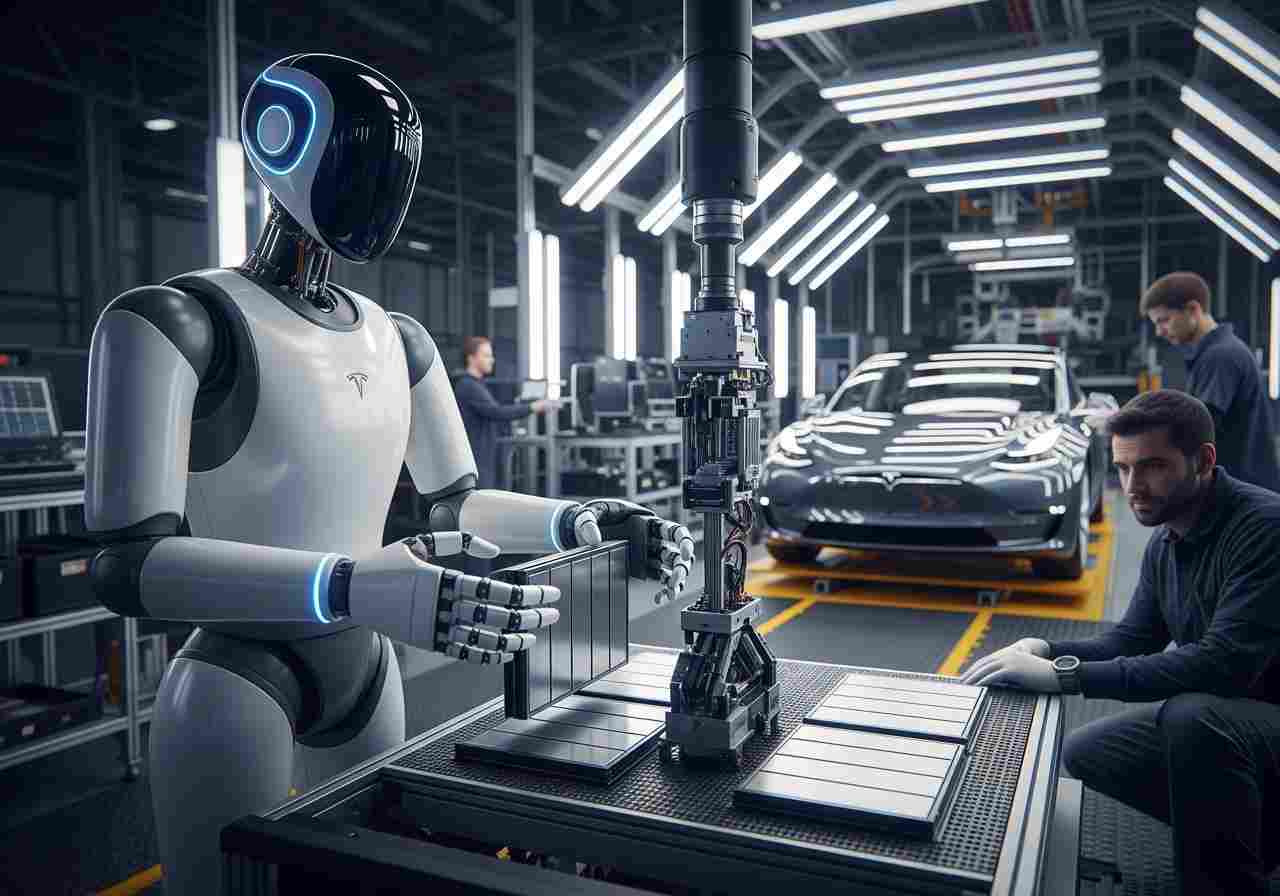
Now imagine the world that robots do the dull work, carry heavy boxes without sweating and even converse with you over coffee. Elon Musk introduced this concept initially at Tesla’s AI Day in 2021 and vowed a general-purpose humanoid robot, capable of transforming everything. He named it the Tesla Bot, which is currently referred to as Tesla Robot Optimus, and it will perform the jobs that humans fear.
The Tesla Robot is not any other gadget. It is a two-legged robot that can walk, carry, and perform labor like humans and is based on technology used in the self-driving vehicles made by Tesla. This robot is designed to reach an average price, and application across the factory, homes, and others, based on the same AI, as Full Self-Driving (FSD) software.
In this article, we will dissect the technology underlying the Tesla Robot, examine the places it may initially appear, overcome the challenges in its way, and consider the ways it may disrupt employment and society. You will understand why Optimus could redefine the concept of humanoid robotics by the end of it.
The Technological Core: How Tesla is creating Optimus
Tesla uses direct technology out of its vehicles to charge the Optimus robot. The intelligence systems that assist the cars in identifying the roads and avoiding the obstacles currently control the steps and grabs of the bot. This change of wheels to legs implies that the robot trains to stabilize and act on the fly as a driver does to check on possible accidents.
Artificial Intelligence and Neural Networks based on Full Self-Driving (FSD)
The main brain of the Tesla Robot is based on the neural nets of FSD. Such networks analyze the video feeds in order to make sense of the world, guess at what follows, and calculate moves. In the case of Optimus, they evolve to deal with limbs and legs and transform car brains into robot elegance.
Tesla uses these models to train on massive data of its millions of cars. Each mile of the drive feeds data about the barriers and ways, which are rolled in sims by robots. This factual information reduces the number of errors and the bot is smarter than its competitors, who are confined to laboratories.
Taking Advantage of Real-World Training Data
Imagine the following scenario: Tesla vehicles capture billions of miles every year, and it is anonymized and processed to gain AI development. In the case of the humanoid robot, it is data that trains models of human behaviors, regarding walking to picking apples. It drives off at a slow pace, because the bots do not crash the car every time they test it.
This is sent to virtual worlds by engineers by which Optimus trains forever. One key win? Data patterns of human videos enable the bot to now sort blocks or fold shirts. The more vehicles pass, the more the robot becomes skilled and there is a likelihood that it will make faster strides in dexterity.
Systems Hardware Design and Actuation
Optimus uses tailor-made components to ensure that it is cost-effective and powerful. The actuators, inspired by Tesla EV motors are precision actuators that move joints. A slender battery, such as those of Model 3s, allows it to be used all day on a single charge and weighs only 125 pounds all in.
Materials play a big role too. It is light but tough, can be produced in large volumes using carbon fiber and alloys. This arrangement aims close to a price of less than 20000 dollars, competing with a used car, and hence factories can just produce them like sedan cars.
Simulation of Human Biomechanics
Our bodies are copied in its design to fit in everyday. The joints are able to bend at the knees and the elbows with 28 degree of freedom allowing smooth reaches. The sensor is able to sense pressure through hands holding tools or eggs without crushing.
Why mimic us? Stair and door and kitchen require it. Optimus can walk 5mph and pick 45 pounds, within the adult range. This bio-inspired will ensure that it can run into our lives without significant adjustments.
The role of Dojo Supercomputer in optimization
Tesla crunches data at super speeds, with AI models being trained in days rather than in months at the Dojo. It is constructed to process videos, simulating scenes, and performs the visual learning of the robot. This internal program bypasses commercial cloud rentals, which accelerates iterations.
Dojo facilitates extensive competencies as opposed to antique robotics that use gradual modifications of code. The bots are trained to evolve as they go, rather than rehearse them all the time. It has already enhanced Optimus demos, walking behind rough terrain, by the end of 2025.
Estimated Applications: Tesla Robot First Deployments
Optimus begins at strategic positions, doing its value before domestic exploits. In the near future Tesla will test their factories, relieving humans of their loads. It is then expanded to broader applications, where AI is combined with physical assistance.
Manufacturing and Industrial jobs
The Tesla Bot is applied in Gigafactories, where it handles such grunt work as the movement of batteries or welding. Man is now exposed to harm in these locations; robots replace, and enhance security. It has sorted components by half and early tests prove it.
This change implies 24/7 production with no rest. By 2026, Tesla is targeting thousands of units, and this changes the assembly lines. It will not replace them all at once, but bots will be effective in collaboration with workers.
Minimizing Factory Floor Risk and Maximizing Throughput
Think of battery handling: burning cells which burn flesh. Optimus lifts them in safe hands, with his eyes to evade accidents. Pilots see output increase by 30% according to Tesla updates.
Assembly lines speed up too. Tools are delivered by robots, or stack parts are brought, liberating employees to be creative. They move through uneven warehouses at a faster rate than wheels and reduce downtime.
The Future of Robotics in the Domestic and Service industry
It is used at home later, yet the vision is very exciting. Optimus might vacuum carpets or wash dishes, be able to learn the habits of your lifestyle through AI. It is affordable to the middle-class homes, which offers independence to many.
Can be easily worried away with such safety features as voice commands and geofencing. First home bots may be simple, and can get more sophisticated with updates. This is a multipurpose model that beats single-purpose cleaners.
Potential of Personal Assistance and Elder Care
In the case of seniors, imagine a friend that reminds of medications or does the laundry. Optimus brings in groceries or facilitates the mobility, and minimizes isolation. Research indicates that such bots may reduce nursing demands by a fifth.
It manages lawn maintenance or takes care of pets in everyday life. Time is saved by the family since the robot learns habits. The ethical tweaks make it respect the privacy, forming user connections.
Supply Chain and Logistics Integration
Optimus benefits warehouses. It loads trucks or scans inventory and connects to the network of Tesla. Semi-autonomous routes reduce mistakes of humans in very large areas.
FSD smarts bots predict shortages, tightening supply chains. Efficiency like amazon, but with Tesla flavor. Millions of people would be humming in depots around the globe by 2030.
Development Challenges and Benchmarking Progress
It is not simple to construct an all-purpose robot. Tesla has challenges of ensuring Optimus is not fixed but adaptable. The movement goes in the right direction, but there are still loopholes.
Achieving True Generalization vs. Task Specificity
Unskilled robots are also specialized at a single task, such as spot-welding. But Tesla wants to be flexible–sorting to cleaning smooth. This requires AI with few examples that is generalized, which is not an easy nut to crack.
Modern industrial weapons are millions of dollars and are task specific. Optimus aims at wide application at low costs, yet unorganized worlds derail it. Wins are suggested by demos, but it takes years to swap in full.
Hurdles of Dexterity and Fine Motor Control
Hands are the hardest part. Egg gripper or screw gripper must have touch sensors, but must not be bulky. The prototypes of Tesla drop sensitive objects, and human dexterity is outperformed.
Feedback loops of tactile feedback are too slow–bots fall when the pressure upsurges. Resolutions are less hard and accelerated AI. By the time there are trials in 2025, it is doing better with the eggs, but piano playing? Not yet.
Viability of Cost, Scalability and Mass Production
Going to 20,000 implies low-cost components and size. The car lines demonstrated by Tesla show it is capable of doing so, however, robots complicate the matter. EV battery swaps are beneficial, but personalized actuators increase start-up costs.
According to Musk, volume production will increase in 2026. Factories pilot projects. The success depends on the equal temperature of EV supply chains.
Real World Performance Verification
Demos wow: Optimus strolls on the ground, arranges blocks, he even dances. It folded a shirt–at AI Day 2022, and it was clumsy, but a shirt nonetheless. In comparison to the Atlas by Boston Dynamics, it is less acrobatic and more practical.
The speed reaches 5 mph; strength is equal to adults. Balance tests, which are important to homes, are done on uneven ground. The measures indicate an 80 percent success in tasks in laboratories, climbing using Dojo modifications.
Economic and Social consequences of the pervasive automation
Optimus was able to turn employment inside out. A factory becomes redundant and another one in robot maintenance appears. Analysts forecast net profit in case we change.
Disruption of the Labor Market and the Future of Work
Millions of manual workers are going to change – consider warehouse pickers. Still, robotics provokes such directions as AI fine-tuning or robot design. A 2024 study at MIT will have 10% displacement, but 15 percent creation in 2035.
We become the people who are on top of the fleets supervising bots. Retraining programs come in to play. To the employees, it is an opportunity to become skilled but not to die.
Universal basic income (UBI) and Policy Considerations
UBI chatrooms grow hotter, as bots multiply. It is supported by Musk, who views automation as fruitful. Taxes on robot labor are being looked at by governments as a means of financing safety nets.
The policies should be balanced in terms of innovation and equity. Europe is on top in employee protection; the US is in the rear. UBI would be able to bridge the gaps, allowing individuals to follow their passions.
Regulatory Oversight, Ethics and Safety
Home bots create risks- such as tripping or theft of information. Tesla constructs failsafes, such as emergency stops. Ethics require that there are explicit guidelines in decision making, devoid of favoritism.
Tests increase trust in the public. Med roles that are regulated by agencies such as the FDA are lagging. Now we require safe roll out standards.
Building Trust in Humanoid AI Interaction
Sci-Fi takeovers cause fear in people and transparency is the way to go. Explainable AI demonstrates the explanation of bots why they behave, which develops faith. Demonstrations with families check the level of comfort.
Chats are natural because voice and gestures are involved. In the course of time, we get used to them as instruments, not as threats. Key? Engage the users in design to relatable bots.
Conclusion: Timeline and Impact of Optimus Evaluation
Tesla Bot is based on the FSD AI, efficient hardware, and Dojo power to drive smart affordable humanoids. It is implemented at the factories, then houses, addressing both hazards and tasks.
Tesla Robot Optimus is more of a paradigm shift than simply tweaks- a combination of vehicles and robots, to win the daily. Projections are high; look at 2026 at factory armies.
Monitor Tesla happenings. It may liberate us to greater things, transforming life step after step as Optimus walks forward.