Ultimate Guide: How Many Calories to Lose Weight Safely
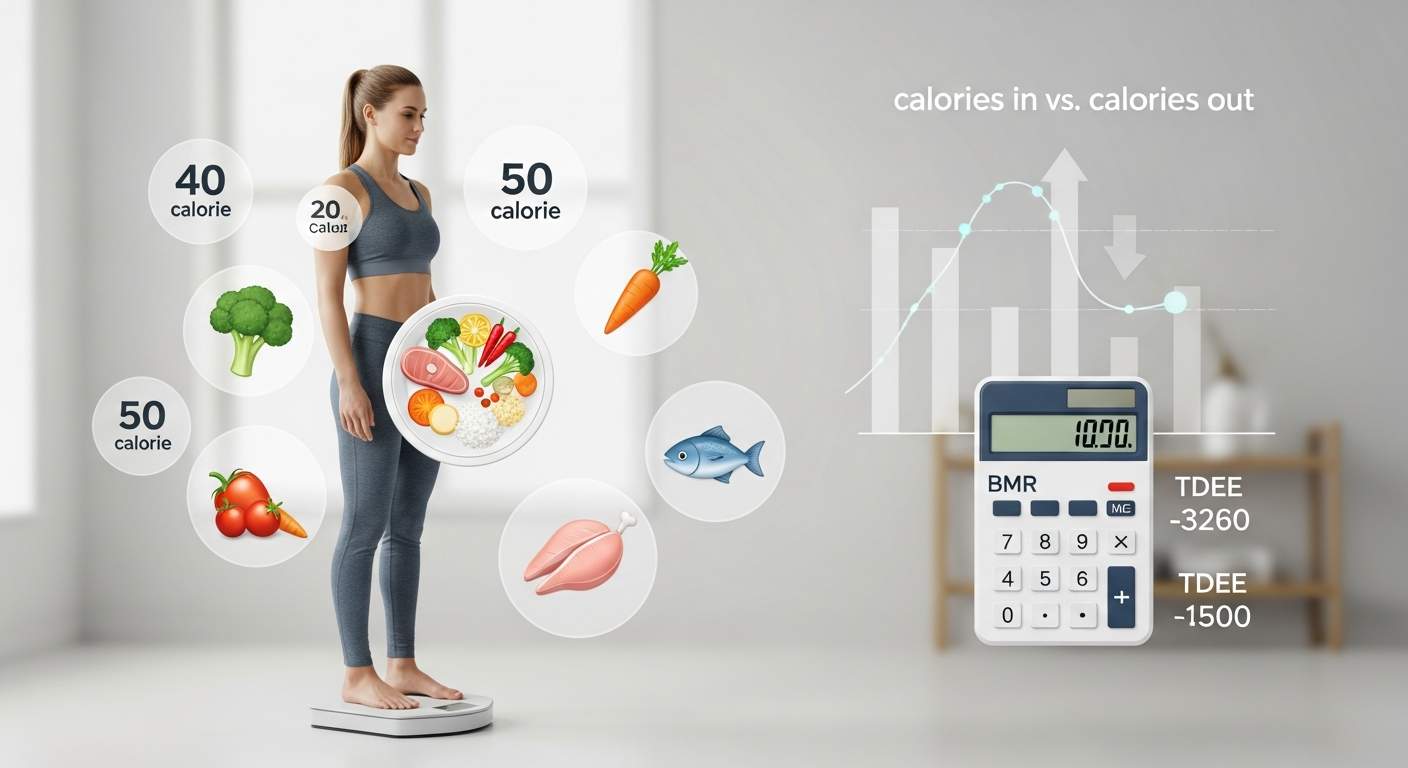
Become confused when it comes to diet tips? One day, you get to read that calories by cutting down to 1,200 a day will melt the fat away. The following, one vows to eat more to burn more. There is no wonder why so many people give up before achieving a result. The weight loss is reduced to one simple science energy balance. Your body requires calories to run on and when you burn more than you consume, then you lose pounds.
This guide penetrates the clatter. We will discuss how a shortage of calories leads to weight loss, but the correct amount varies according to you, your age, your size, and your habits all determine the amount. Hang on, we are going to dissect the process of determining your own eating goal, make informed habits and maintain your progress consistently over time without dropping out.
Calories in vs. Calories out: The CICO of Energy Balance
There is one important notion behind weight loss. Even when you are resting, your body uses a certain amount of calories even when you are resting. Consume less than it and you leave a hole which fills in the stored fat.
The Fundamental Rule: The development of a Calorie Deficit
Consider the calories as gas in a car. Food and drinks are sources of calories. Calories out are produced by normal functions, activity and exercise. To lose weight, target your weight loss to be 500 to 1,000 calories per day. This arrangement will result in gradual fat burning without a system shock. This is what is referred to as a calorie deficit to weight loss by experts. The foundation of any long-term plan is it.
Most people strive to find shortcuts but as explained in energy balance, patience bears fruit. In case you cut too hard, the way your body adapts is to slow down your metabolism. Begin at the small scale, and change will be permanent.
Computing Basal Metabolic rate (BMR) and Total Daily Energy Expenditure (TDEE)
BMR is a measurement of the amount of calories required by your body when you are resting to help your heart beat and lungs to breathe. It is the foundation of your energy consumption. TDEE will be included in your daily activities such as walking to work or going to the gym.
Calculate BMR by use of Mifflin-St Jeor formula. In case of men, then 10 times weight in kg, 6.25 times height in cm, less 5 times age, then plus 5. Women replace the latter with 161 less. It is not hard with online calculators, just enter your numbers.
In order to calculate TDEE, one multiplies BMR with an activity factor. Sedentary folks use 1.2. Lightly active? Go with 1.375. Active middle makes it 1.55, and active extreme only 1.725. Here’s a quick guide:
- Calculate your BMR on the Internet or using the formula.
- Choose level of activity multiplier.
- BMR multiplied by that number gives TDEE
This provides a good base to the amount of calories to lose weight. Follow it one week to fine tune it.
The Myth of the “Magic Number: Why 1,200 Calories is not Universal
You are around 1,200 calories all over the place as a fast weight loss trick. But it’s not one-size-fits-all. To others it is too low and it causes hunger or deficiency of nutrients. According to health organizations such as the Mayo Clinic, women require a minimum of 1, 200 to 1500, men 1,500 to 1,800 minimum based on size.
Going beyond that means muscle wastage and a slow thyroid. I have witnessed friends falling when hitting such small intakes, and then falling worse. According to your height, weight, and goals you change in needs. Shun hype- make it your own to get serious results.
How to find out your best calorie burn to lose weight
We have the fundamentals, now, we shall see what you number is. It is not a guessing game, put it to right using math and your lifestyle.
The Pound-to-Calorie Ratio: The 3500 Calorie Diet
People keep on saying 3,500 calories equal to one pound of fat. Burn as much over as that, during a week, and you lose a pound. It is a crude estimation based on research concerning fatness in the body.
1 to 2 pounds per week is healthy weight loss. It consists of a deficit of 500 to 1,000 calories per day. It is supported by the CDC data–go higher and you will be prone to the effect of the yo-yo. Keep in mind, you do not wear a size nine forever as you get slimmer; this rule stretches along with your new body.
Creating a Excellent and Eco-Friendly Calorie Deficit
Safe deficits are 500 calories lower than TDEE because of one pound of weight lost per week. But multiply it by two, by two pounds, but not by being foolish. Big cuts not only consume fat but also muscle and slows down your burning rate with time.
Use this template: TDEE- 500. Assuming that you are 2,200 calories maintenance, consume 1,700. Adjust based on how you feel. This maintains the energy level and hunger are low.
The most important thing is sustainability. According to research, crash diets fail 95 per cent of the time. Develop habits, and weight is lost.
Correction of the Level of the Activity and Composition of the Body
Exercise increases TDEE as a result of which you are able to eat more and lose. A desk job may imply 2,000 TDEE, and it upsurges to 2,500 with the runs. That allows you to power exercise up.
At rest, the muscles use more energy compared to fat. A woman of 150 pounds that has a toned arm circumference has a greater BMR as compared to a woman of the same weight with inadequate muscle. Dwelling on strength training in order to retain that advantage.
Take Sarah, 30, 160 pounds, desk-bound. Her TDEE is 1,900. She now practices yoga three times a week, three times a week- now it is 2, 100. She goes down to 1,600 calories rather than 1,400. Easier to stick with, right?
More than the Numbers: Macronutrient and Food Quality
Energy is time-based but what you consume can be a determinant of how you feel. Eat smart so as to be full and healthy.
Macro Matters: Protein, Fat and Carbohydrates
Protein, fats, carbs, Macros–they determine whether your diet is making or breaking you. Protein is anti-hunger and anti-muscle-building; it should be at the structure of 0.8 grams per pound of body mass. It also enhances thermogenesis which burns additional calories in order to digest.
Fats maintain the levels of hormones; do not fall below 20% consumption. Carbs provide an instant energy during exercises. Tilter them to satiety on weight loss. There is nothing like skipping this and fighting cravings.
Weight loss macronutrients are not an option. Chicken salad is a high-protein meal that is more long lasting compared to chips.
Tracking Accuracy: Food logging Tools and Techniques
Making guesses will cause slips. weigh meats and nuts, weigh to grams. Barcodes are scanned by apps, which reduce entry time.
Dressings or sodas contain the hidden calories. Record drinks also; a latte will be an extra 200 with ease. Common pitfalls? Cheating at weekends or eyeballing bites.
MyFitnessPal and Lose It. Track are the best applications to use in two weeks. Consistency contains patterns such as late night snacking. This makes you more calories conscious.
- Choose an app and set it up.
- Log every bite, even gum.
- Review weekly to spot trends.
Stop Concentrating on Calorie Restriction and Start to think about Nutrient Density
Not all calories hit the same. Two hundred veggies are full of fiber and vitamins; the same candy makes the blood sugar high and you feel empty. Choose foods with high density so that you can get full with less calories.
Food volume assists with this, large dishes of greens enlarge the meal with no significant addition. This is curtailed by a Harvard research. Replace carrots with swap chips, you will consume less but will be satisfied.
Quality amps your health. It combats exhaustion and helps skin and bones to lose.
Measuring the Progress and engaging in the necessary Caloric Adjustments
Loss isn’t linear. Hits stalls? Don’t panic–tweak smartly.
When You hit the weight loss plateau
Plateaus strike when it gets used to it. Weight loss lowers BMR by 5-10 per cent lost. Metabolism becomes efficient and less burns.
Statistics indicate that most of them do this after 4-6 weeks. It is aggravated by stress or sleeplessness. Measures on track also–waist decreases though scale remains steady.
Recalculation of TDEE: Customizing Your Intake
Recheck TDEE after every 10lb or 6 weeks. Insert new weight and activity. In case you have lost 10, your needs decrease 100-200 calories.
At the stuck part it is a good idea to cut 100-200 more or you can add a walk. Do not make huge cuts, they counteract. This maintains a forward push without suffering.
Listening To Your Body: Hunger To Habit
Disregard actual hunger and you will feast on a later occasion. Hear the rumbling in the stomach of boredom munchies. Excessive limiting of tanks vitality and spirits.
Take diet breaks: Have one day of meals at maintenance per week. It rejuvenates hormones and enhances strength of will. In the long run, this will avoid burnout.
Conclusion: Mindful Calorie Management in Case of Sustaining Weight Loss
It takes three steps to master the number of calories to lose weight. First, calculate your TDEE. Second, deduct 500 to have safe deficit. Third, have nutrient-dense foods and macro loaded.
Calories lead you round, but they are not chains. Create a life of whole food, fun exercises and sleep. You not only should expect consistent victories but also should not be expecting a crash. Get down to it–monitor one meal, experience the change. Your healthier self waits.
Medical Disclaimer:
This article is for informational purposes only and does not constitute medical advice. Always consult a qualified healthcare professional, registered dietitian, or physician before making changes to your diet, calorie intake, or exercise routine, especially if you have underlying health conditions.